Currently Empty: $0.00

How can rethinking what we discard help create a more sustainable future?
Genre: Informational Text
Text Structure: Problem and Solution
Main Reading Skill: Analyze Problem-and-Solution Relationships
Every year, millions of electronic devices are discarded around the world. Smartphones, laptops, televisions, tablets, and other products often end up in landfills even though some of their parts remain usable. As technology develops and consumers replace devices more frequently, electronic waste, or e-waste, continues to grow. This creates an environmental challenge because constantly producing and discarding electronics is not sustainable. Manufacturing new devices requires energy and valuable natural resources, while discarded electronics may contain materials that can damage the environment if they are not handled properly.
One reason the problem continues to grow is that electronic products do not remain in use forever. Some devices wear out, while others are replaced because newer models offer improved features. Repair can also be difficult when products are not designed to be opened or when replacement parts are unavailable. As a result, functioning materials and valuable resources may be discarded along with damaged or outdated devices.
A circular economy offers one possible response to this problem. The central principle of a circular system is that products and materials should remain in use for as long as possible. Instead of following a pattern of producing, using, and discarding electronics, manufacturers and consumers can repair, reuse, refurbish, and recycle them. Supporters claim that this approach can reduce electronic waste while decreasing the need to obtain new raw materials.
Recovering valuable materials is an important part of the solution. Electronic devices contain numerous components, including small quantities of metals such as gold, silver, copper, and lithium. When devices are recycled correctly, specialized facilities can separate these materials from other parts. Recycling companies can then extract useful resources and return some of them to manufacturing. Recovering existing materials does not remove the need for mining completely, but it can reduce some demand for newly obtained resources and prevent useful materials from being wasted.
Extending the life of devices can reduce waste before recycling even becomes necessary. Some companies now offer repair services, replacement parts, and trade-in programs. A damaged phone, for example, may need only a new battery or screen rather than complete replacement. Refurbished devices can also be tested, repaired, and sold to new users. Engineers, manufacturers, and environmental organizations can collaborate to develop products that are easier to repair and contain fewer manufacturing flaws. Designing products for longer use can create greater harmony between technological progress and environmental responsibility.
Recycling centers are also essential because electronic waste must be handled carefully. Workers separate devices and identify materials that can be safely recovered. However, recycling electronics can be complicated. Devices contain many different materials, and some substances require specialized treatment. Recycling facilities also need suitable equipment, trained workers, and effective safety procedures.
For this reason, researchers are exploring new methods that could improve the process. Scientists are studying whether biological processes involving certain bacteria and insect larvae could help recover useful materials or process particular types of waste. Such methods are still being investigated, but future developments could make recycling more efficient and may help eliminate some forms of hazardous waste.
A circular economy also depends on decisions made before a product reaches a recycling center. Manufacturers can design electronics that last longer and are easier to repair. Businesses can provide trade-in and refurbishment programs, while consumers can maintain devices and consider repair before replacement. Governments can support safe recycling systems and establish standards for handling electronic waste. No single action can address the entire problem, so these different approaches need to work together.
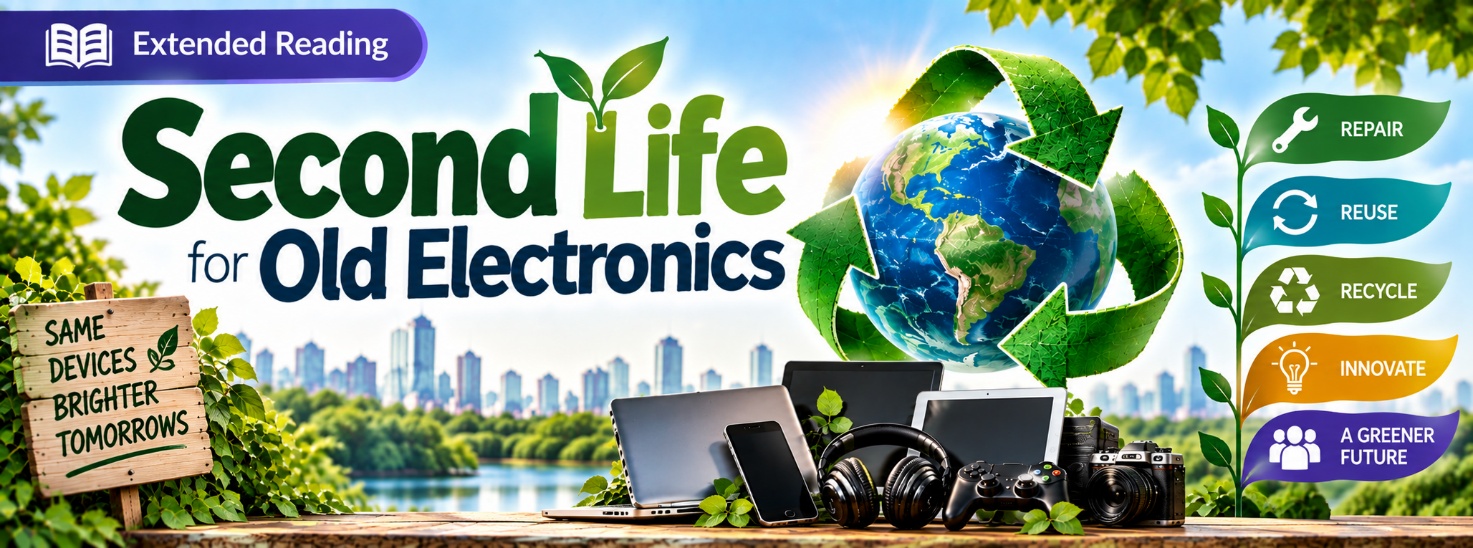
Giving old electronics a second life therefore involves more than simply recycling them after they are discarded. Repairing devices, reusing functioning products, recovering valuable materials, improving product design, and developing safer recycling methods can all reduce electronic waste. Although creating effective circular systems requires cooperation, technology, and appropriate facilities, keeping electronics and their materials in use for longer can conserve resources and reduce environmental harm. A more circular approach can help societies benefit from technology without treating every old device as something that has lost its value.