Currently Empty: $0.00
How can images tell stories and influence the way we understand people, events, and the world around us?
Genre: Informational Text
Text Structure: Compare and Contrast
Main Reading Skill: Compare and Contrast
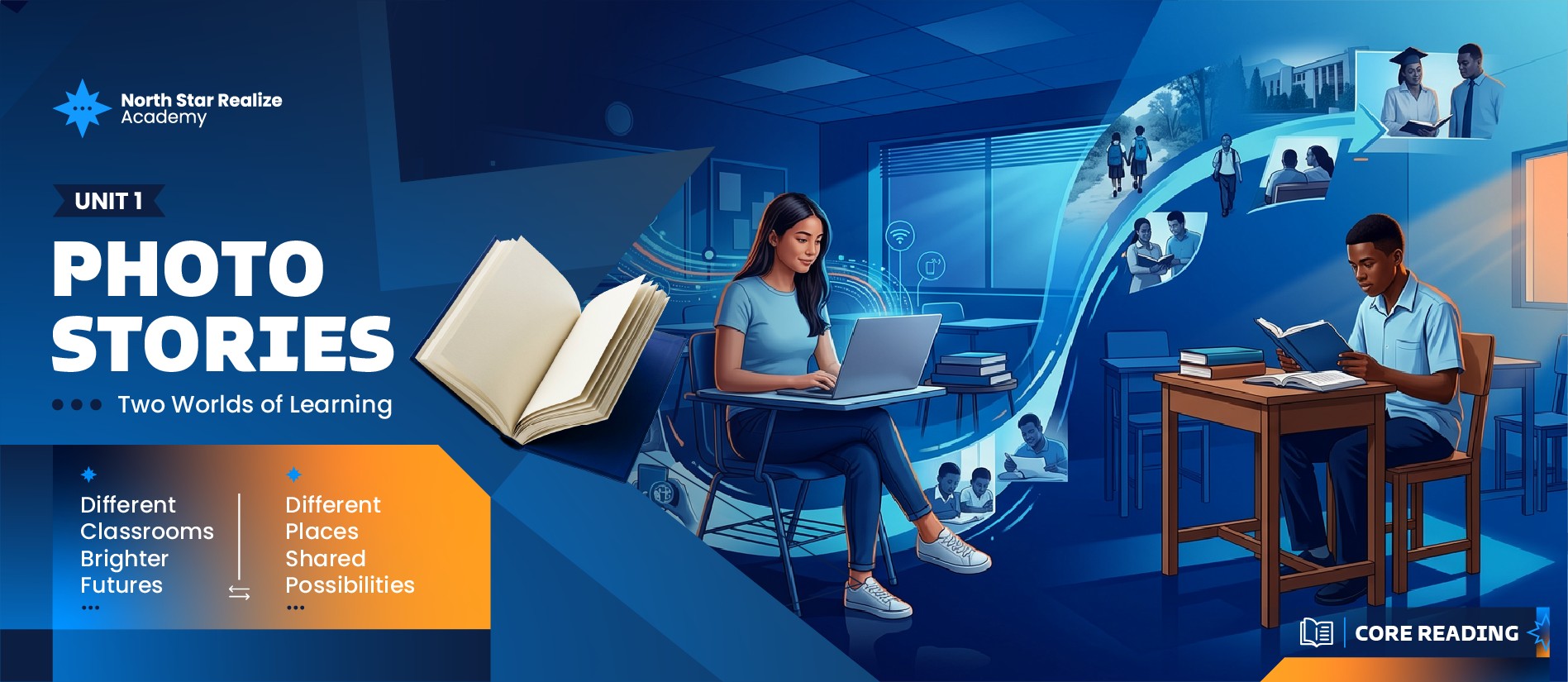
Education provides opportunities for learners worldwide, but the conditions in which they study can vary widely. Some learners attend well-equipped schools with modern technology, while others study with fewer resources. These differences do not determine a learner’s ability, but they can influence the learning experience. Comparing access to information, physical conditions, and future opportunities can increase our awareness of how educational environments affect learning.
One major difference is access to resources and information. In well-equipped schools, learners may use reliable internet connections, digital devices, libraries, and other educational materials. These resources allow them to engage with lessons in different ways. Videos and digital activities can capture their attention and prompt them to explore topics independently. When they need additional help, learners can deliberately search online for explanations and examples. Having several sources of information can also allow learners to examine a topic from different perspectives.
In contrast, learners in schools with fewer resources may depend mainly on textbooks and information provided by teachers. In remote areas, internet access may also be limited or unreliable. Libraries, laboratories, and digital equipment may not always be available. These learners can still develop knowledge and skills, but finding additional information may require more time and effort.
Physical learning conditions can also differ. Some learners study in classrooms with suitable lighting, enough space, and equipment for different activities. These conditions can make participation and concentration easier. Other learners may study in crowded classrooms or schools with limited facilities. Some travel long distances to attend school, especially in remote communities. Difficult or unsafe journeys can affect attendance, and learners may even become injured while travelling. These conditions can have an important impact on their daily educational experience.
Access to future opportunities is another difference. Learners with regular access to technology can more easily find information about universities, training programs, scholarships, and careers. Online resources may inspire them to consider possibilities beyond their local communities. Learners with limited access may depend more on teachers, families, community members, or local sources for similar information. These sources can provide valuable guidance, although learners may have fewer opportunities to explore options independently. However, this difference should not convince us that learners with greater access are more capable.
Despite their different educational environments, learners also share important similarities. They can develop skills, work toward academic goals, and benefit from support from teachers, families, and communities. Technology does not guarantee successful learning, and limited resources do not automatically prevent it. Educational conditions can influence how learners study and what opportunities they can access, but they do not define their ability or potential.