Currently Empty: $0.00

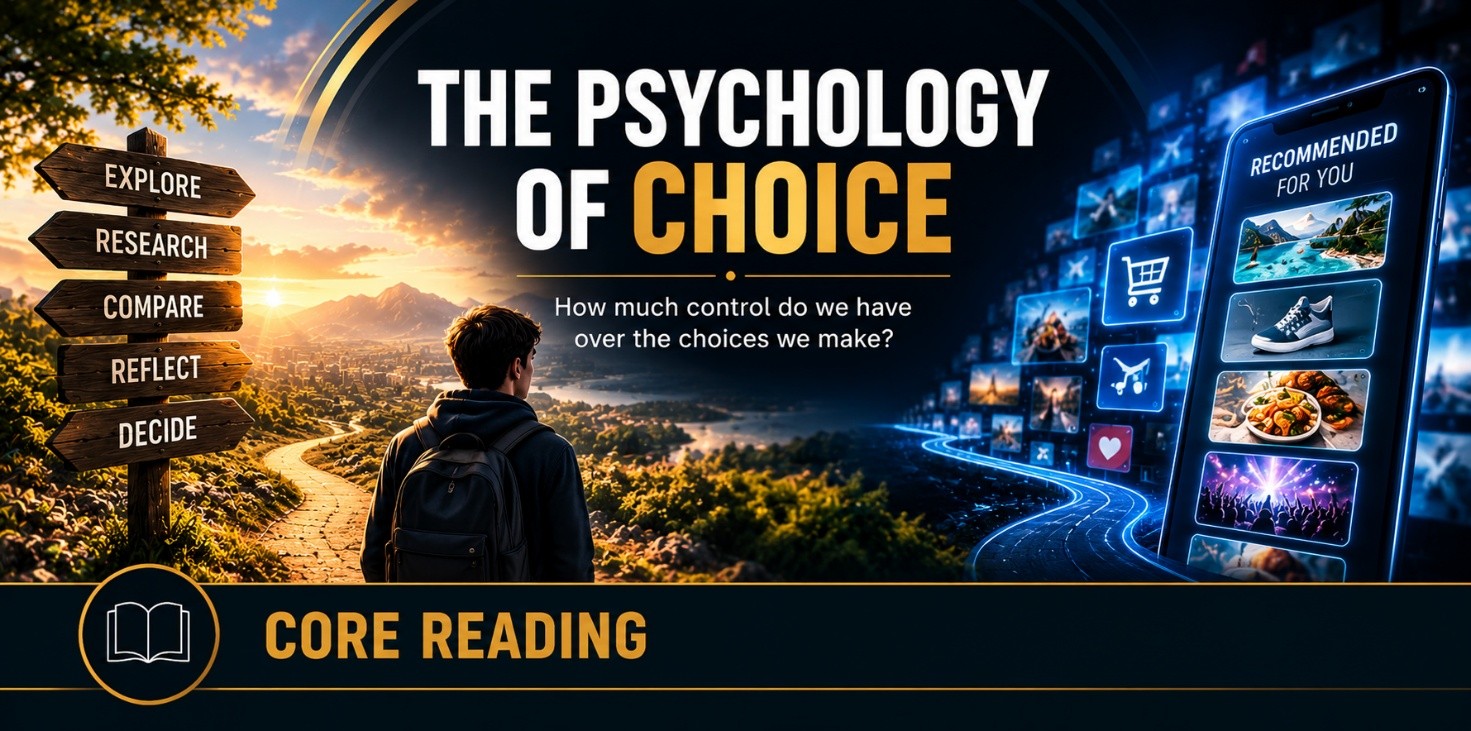
How much control do we have over the choices we make?
Genre: Analytical Article
Text Structure: Compare and Contrast
Main Reading Skill: Analyze Similarities and Differences
Imagine opening a streaming platform on a Friday evening, hoping to watch something different. Before you begin searching, several films appear under “Recommended for You.” One catches your attention, and moments later, you press play. The decision feels personal, yet the platform has already shaped what you noticed. Similar experiences occur when online shops suggest products or music services create playlists. How much control do we have when technology helps decide what we see? Two approaches are self-directed decision-making, in which people actively explore options, and algorithm-guided decision-making, in which systems recommend choices using patterns in data. Comparing them reveals both shared benefits and important differences.
Despite their differences, both approaches involve narrowing a large number of options than anyone could reasonably examine. Someone planning a vacation might narrow destinations by cost, location, and interests. Similarly, a travel website might curate a shortlist based on previous searches. In each case, a large number of possibilities becomes easier to manage. Both approaches are also affected by existing preferences. A traveler’s predisposition toward beach vacations may shape an independent search, while an algorithmic system may reinforce that preference by recommending similar destinations. Neither method is entirely neutral. Moreover, both can lead to discovery: browsing a bookstore might reveal an unfamiliar author, just as a recommendation could introduce a reader to a new genre. Whether the outcome is useful depends on the quality of the information and the care taken in judging it.
The main differences concern who directs the search, how much effort it takes, and which options attract attention. In self-directed decision-making, people usually set their own criteria. A student researching college programs, for example, might compare institutions and scrutinize their course descriptions. By contrast, recommendation systems rank options before users see them. This saves time, but it can also increase the salience of certain choices simply by placing them near the top of a screen. When a system repeatedly suggests familiar content, it may constrain the range of alternatives a person considers. The opacity of some recommendation systems makes this difficult to notice: users may not know why particular results appear. Yet independent searching has its own limitations. Search rankings and advertising still affect what people find, and a person’s susceptibility to social influence may narrow the search. Likewise, users of recommendations can reject suggestions and look elsewhere. A discerning user therefore questions the selection rather than accepting it automatically.
Digital recommendations do not remove human judgment. Independent exploration can encourage curiosity, but it takes time; recommendations offer convenience, but they may hide worthwhile alternatives. The real issue is not whether one method is always better. It is whether we recognize how each method shapes the information available to us. Returning to the viewer who chose a recommended film, pressing play was a personal decision, although the platform had influenced which titles appeared first. Meaningful control involves more than choosing among visible options: it also requires asking why those options became visible.