Currently Empty: $0.00

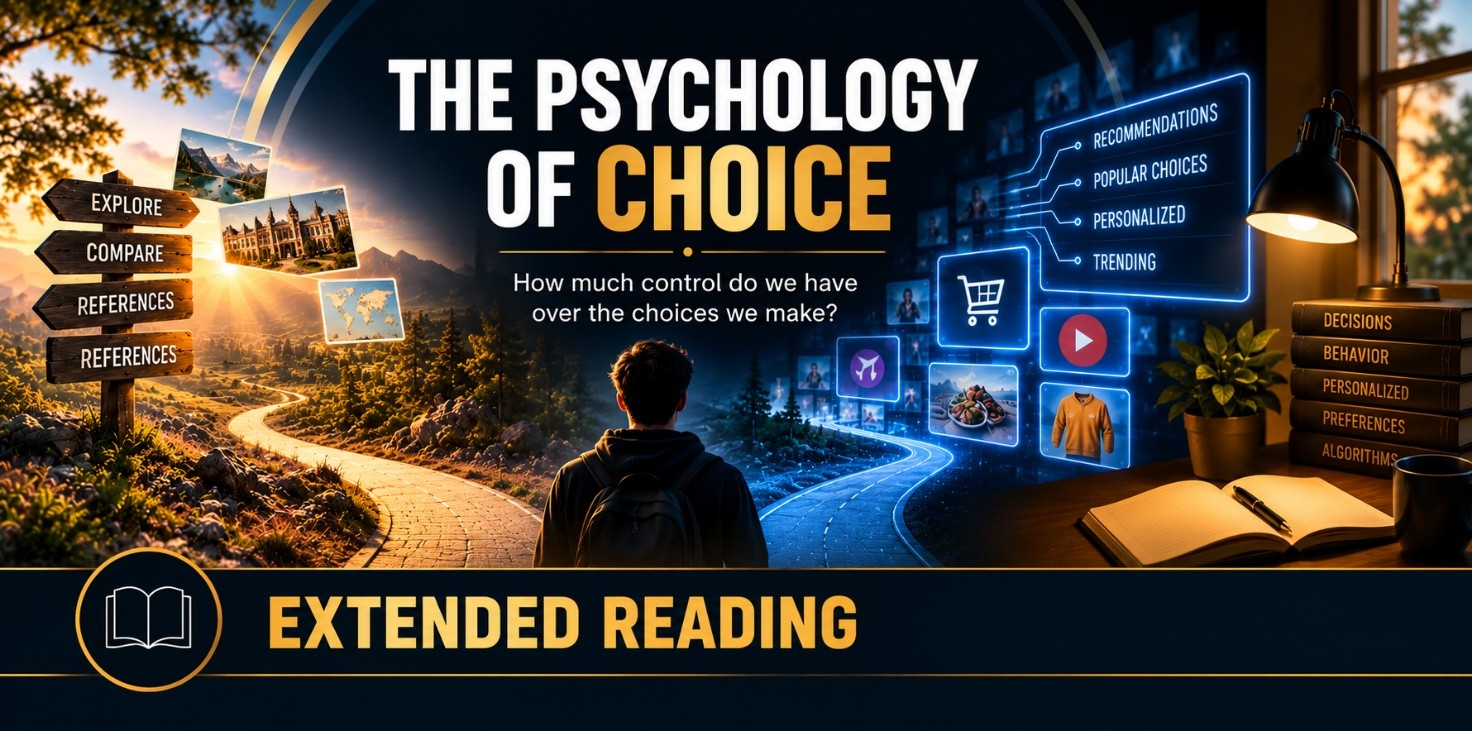
How much control do we have over the choices we make?
Genre: Analytical Article
Text Structure: Compare and Contrast
Main Reading Skill: Analyze Similarities and Differences
Imagine opening a streaming platform on a Friday evening, determined to watch something different. Before you begin searching, a row of suggested films appears under “Recommended for You.” One catches your attention, and within seconds, you press play. The choice feels entirely personal, yet the platform has already influenced which titles you saw first. Similar experiences occur when shopping websites suggest products, music services create playlists, and social media platforms decide which posts appear first. These conveniences raise an important question: are we making independent decisions, or are digital systems increasingly making them for us? Two approaches help us explore this issue: self-directed decision-making, in which individuals actively investigate their options, and algorithm-guided decision-making, in which technology recommends possibilities based on patterns in data. Although these approaches differ in how they operate, both shape our choices in ways we may not immediately recognize.
Despite their differences, both approaches help people manage an overwhelming amount of information. Consider someone planning a vacation. An independent traveler might compare destinations according to cost, climate, and personal interests. Similarly, a travel website might curate a shortlist based on past searches and booking patterns. Both methods reduce hundreds of possibilities to a more manageable selection. Furthermore, neither approach is entirely free from personal preferences or outside influences. A traveler’s predisposition toward beach vacations may guide an independent search, while an algorithmic system may reinforce that preference by repeatedly recommending coastal destinations. In both cases, familiar choices can begin to seem more attractive than unfamiliar ones. However, both approaches can also encourage discovery. Browsing a bookstore may introduce someone to an author they have never heard of, just as a recommendation system might suggest a surprising new genre. The difference between a useful suggestion and a disappointing one often depends on whether people question the information they receive. Neither independent exploration nor digital assistance guarantees a good decision.
The differences become more significant when we examine control, effort, and the visibility of alternatives. In self-directed decision-making, individuals usually establish their own priorities and decide which sources to investigate. A student choosing a college, for instance, might compare programs, visit campuses, and scrutinize graduation statistics rather than relying on a single ranking. This process demands time, but it allows the student to investigate unexpected possibilities. By contrast, algorithm-guided systems organize information before users begin evaluating it. A recommendation platform can analyze thousands of options almost instantly, making the decision-making process faster and easier. Yet convenience can carry a hidden cost. When a system places certain results at the top of a screen, it increases their salience, making users more likely to notice them. Repeated suggestions may also constrain exploration by keeping unfamiliar alternatives out of sight. The opacity of some recommendation systems adds another difficulty: people may not understand why particular products, articles, or destinations appear. Nevertheless, independent searching is not automatically more reliable. Advertisements, search rankings, and the opinions of friends can shape what individuals investigate. A person’s susceptibility to social pressure may lead them to follow popular recommendations even while believing the decision was independent. Conversely, a discerning user of digital recommendations can compare sources, question rankings, and deliberately search beyond the suggested options. The essential difference, therefore, is not simply whether technology is involved, but how actively individuals participate in selecting and evaluating information.
Ultimately, self-directed exploration and algorithm-guided recommendations offer different combinations of freedom, convenience, and responsibility. Independent searching may encourage curiosity and deeper investigation, although it can be exhausting when choices are numerous. Digital recommendations save time and sometimes reveal unexpected opportunities, but they may also narrow attention without users realizing it. Rather than rejecting recommendations altogether, people can use them as starting points instead of final answers. A student might examine suggested colleges but also research institutions outside the list. A traveler might consider recommended destinations while exploring places that do not match previous vacations. Returning to the viewer choosing a film, the most meaningful decision may not be which recommended title to watch but whether to explore beyond the recommendations at all. Having control over our choices means more than selecting an option; it means understanding how that option reached us and deciding whether other possibilities deserve consideration.