Currently Empty: $0.00

How can rethinking what we discard help create a more sustainable future?
Genre: Argumentative Text
Text Structure: Claim, Reasons, and Evidence
Main Reading Skill: Analyze a Claim and Supporting Evidence
Every year, millions of tons of plastic waste enter the world’s oceans. Bottles, bags, fishing nets, and food packaging can remain in the environment for many years. This pollution damages marine ecosystems and threatens sea animals. Reducing plastic waste is a complex challenge, and recycling alone cannot solve it. However, turning ocean plastic into useful products is an effective part of the solution because it can reduce waste, keep materials in use, and encourage more responsible choices.
One key reason to support this approach is that it gives discarded plastic a second use. Cleanup projects collect plastic from beaches and coastal waters before it causes further environmental damage. The plastic is then cleaned, sorted, and processed into material that manufacturers can use. Instead of producing everything from new plastic, businesses can turn to recycled materials. As a result, some plastic that might remain in the environment can become a useful resource.
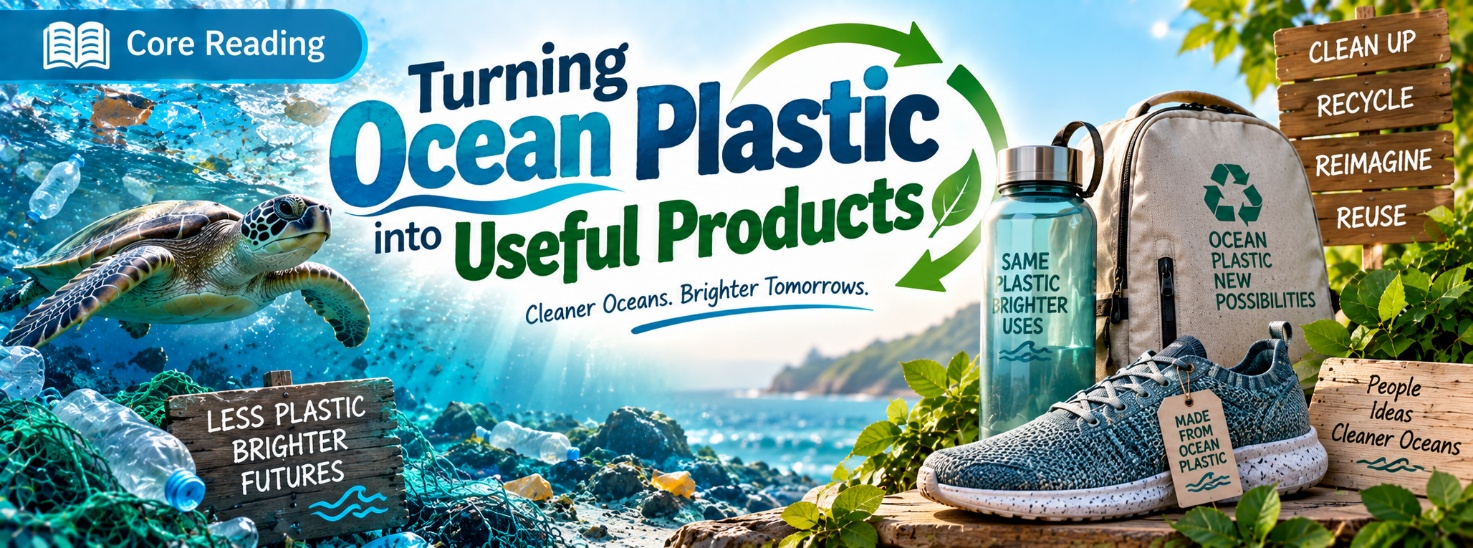
A second reason is that recycled plastic can be used to make new products. Companies already use it to produce shoes, clothing, backpacks, furniture, and water bottles. Manufacturers are also working to upgrade recycling technology so that smaller pieces of plastic can be processed more efficiently. These improvements can extend the life cycle of existing materials and reduce some of the need for new plastic. Some companies also use renewable energy in their recycling operations, making the process more environmentally responsible.
Consumer choices provide another reason to support this approach. Demand for environmentally responsible products has increased in recent years. Surveys of consumers often show that many customers prefer companies that use greener materials and sustainable manufacturing methods. Consumers can also think more carefully about their possessions and avoid throwing away items that can still be reused. Environmental groups argue that people should take greater ownership of the waste they create. Consumers can support this effort through responsible recycling and more thoughtful purchases, including products made from recycled materials.
However, there are limits to what recycling can achieve. Collecting, cleaning, and processing ocean plastic requires money, energy, and effective recycling systems. Some types of plastic are also difficult to reuse. In addition, recycling does not prevent unnecessary plastic from being produced in the first place. Therefore, recycling should work alongside other actions, such as reducing unnecessary plastic use and improving product design.
Turning ocean plastic into useful products cannot solve ocean pollution by itself. Nevertheless, it can keep materials in use for longer, reduce some demand for new plastic, and encourage more responsible choices. For these reasons, recycling ocean plastic can play an important role in a broader effort to create a cleaner and more sustainable future.