Currently Empty: $0.00

How can images tell stories and influence the way we understand people, events, and the world around us?
Genre: Reflective Narrative
Text Structure: Visual Analysis and Reflection
Main Reading Skill: Analyze and Interpret Visual Meaning
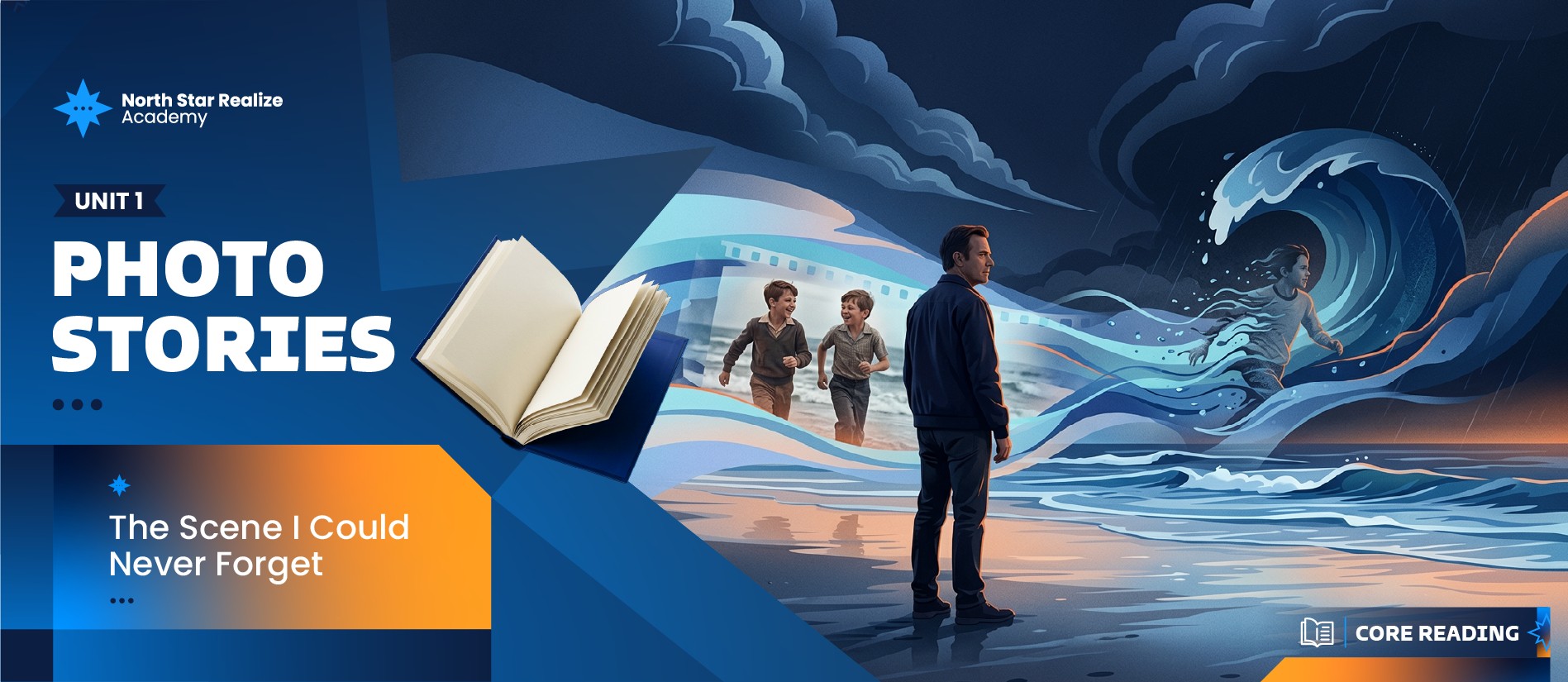
The sea looked peaceful that afternoon. Small waves moved gently toward the shore, leaving white foam on the wet sand. I stood at a distance and listened. For most people, it was simply the sound of the sea. For me, it could trigger a memory I had spent years trying to avoid. Even photographs of beaches brought the scene back. But that afternoon, I had finally returned. A long stretch of wet sand lay before me. Then the wind touched my face, and I remembered the day that had changed everything.
Years earlier, my friend and I had come to the same beach despite warnings of a powerful storm. At first, the beach seemed safe. We laughed as we walked beside the water. Gradually, however, the wind became stronger and the sky darker. I stepped back, but my friend remained near the sea. I called to him, but the wind carried my voice away. Behind him, a huge wave began to rise like a dark wall. Before he could escape, it crashed down and swallowed him. I waited for him to appear again, but he did not.
That final image became deeply encoded in my memory. For years, I tried to assemble the separate pieces of that day: the warning, the dark sky, my decision to step back, and my friend standing near the water. My memory was not exclusively about losing him. It also carried guilt because I had suggested the trip. Avoiding the beach became my usual mode of dealing with the memory, but staying away did not make it disappear.
Eventually, I realized that I needed to return. Standing on the shore again, I began to see the beach differently. It now had a dual meaning. It represented the beauty of nature, but also its hidden danger. I had once thought that a familiar place was a superior choice because it seemed safer. Now I understood that appearances can be misleading.
Returning also helped me understand my guilt differently. I had chosen to visit the beach, but I had not controlled the storm or the wave. The experience began to demonstrate an important difference between accepting responsibility for a decision and blaming myself for something I could not control.
The implications of that day have stayed with me. I now take warnings more seriously and try to look beyond the first appearance of a situation. More importantly, I learned that the meaning of a memory can change. As I watched the waves, I still remembered my friend disappearing beneath the water, but that was no longer the only image in my mind. I also remembered us walking and laughing together before the storm.
For years, the beach had represented only fear and loss. Now it also represented friendship and acceptance. A visual moment may last only seconds, but the meaning we give it can remain with us—and change the way we understand an experience—for years.