Currently Empty: $0.00

How do inventions change the way people live and shape history?
Genre: Informational Text
Text Structure: Cause and Effect
Main Reading Skill: Identify Cause-and-Effect Relationships
Before the modern engine, people relied on human strength, animals, wind, and flowing water for power. Farmers used animals to work in fields, while ships depended on favorable winds. Watermills and windmills provided energy for some tasks, but they were not always reliable because they depended on natural conditions. As populations grew and trade began to expand, people needed a stronger and more efficient source of power. The development of the steam engine became one of history’s most important innovations.
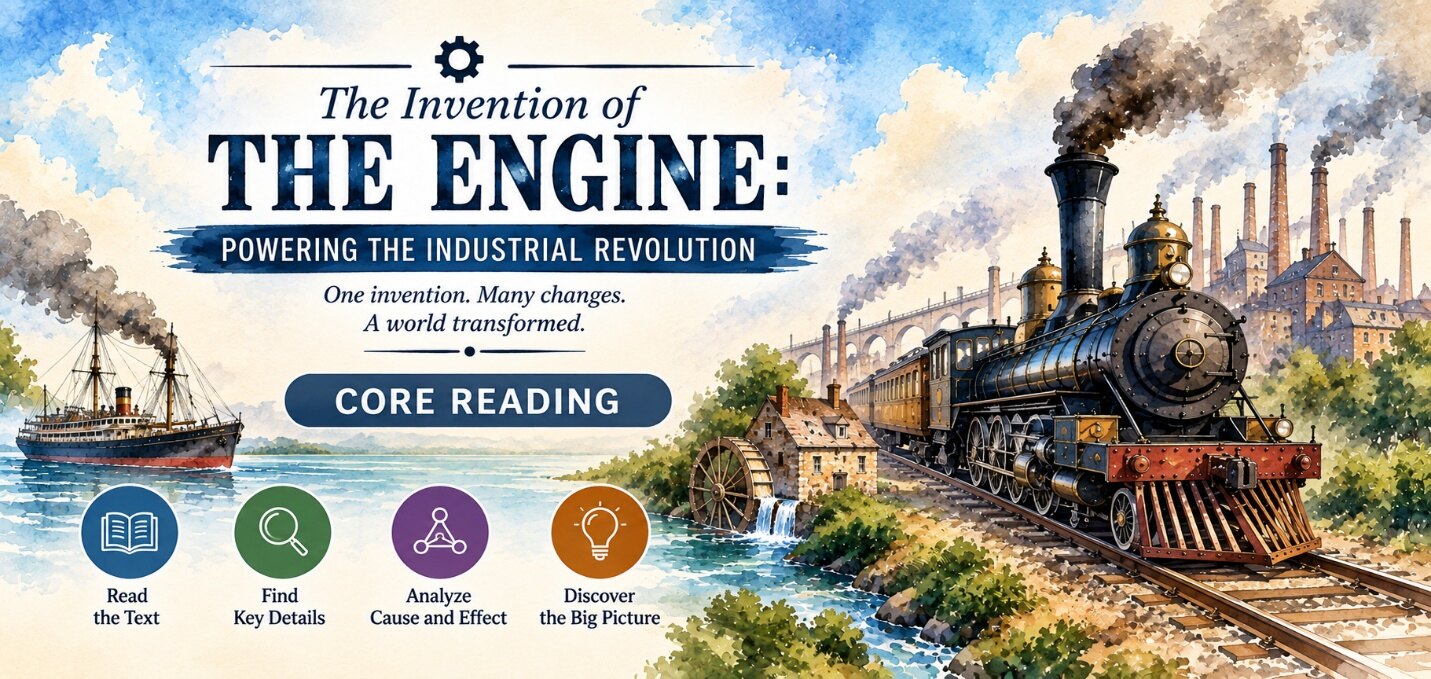
The engine greatly changed transportation. Before steam-powered vehicles, traveling long distances was slow and often unpredictable. Steam trains could carry passengers and goods much faster than horses and wagons. Railways connected cities and made long journeys easier. Steamships also reduced people’s dependence on the wind. As transportation improved, businesses could reach new markets, goods could travel greater distances, and communication between regions became faster. These developments transformed transportation and connected people and economies more closely.
The engine also changed manufacturing. Before factories became common, many products were manufactured by hand in homes or small workshops. Producing large quantities of goods required considerable time and effort. Steam engines powered large machines, allowing factories to produce goods faster and in greater quantities. As production increased, many everyday products became more affordable for ordinary families. Businesses grew, new jobs were created, and industrial production became increasingly important to the economy.
This growth contributed to industrialization, which also changed where and how people lived. Because factories needed many workers, people moved from rural areas to growing cities in search of employment. However, rapid urban growth created new problems. Some workers faced long hours, dangerous machinery, and unsafe workplaces. In response to these conditions, governments gradually introduced laws designed to protect workers and improve working conditions.
The engine created long-term environmental effects as well. Engines powered by fossil fuels helped transportation and industry grow, but they also produced harmful emissions. Today, concerns about pollution and climate change have encouraged engineers to develop cleaner technologies and renewable sources of energy.
The history of the engine demonstrates how one invention can create a chain of effects. It changed transportation, increased production, encouraged the growth of cities, and supported economic development. At the same time, it created social and environmental challenges. Understanding these connected effects shows how inventions can change everyday life and shape the direction of history.