Currently Empty: $0.00

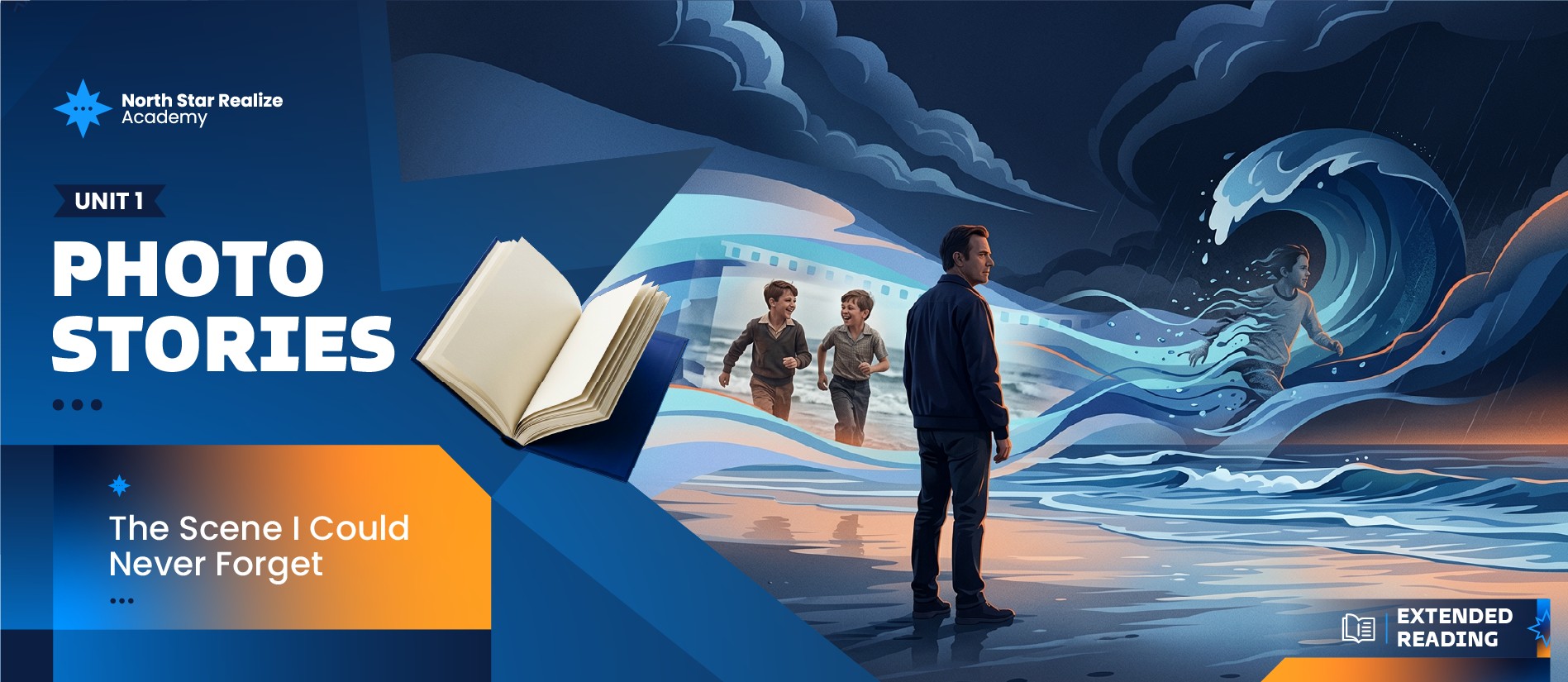
How can images tell stories and influence the way we understand people, events, and the world around us?
Genre: Reflective Narrative
Text Structure: Visual Analysis and Reflection
Main Reading Skill: Analyze and Interpret Visual Meaning
The sea looked almost innocent that afternoon. Small waves folded gently onto the shore, leaving thin lines of white foam across the wet sand. The sky was pale, and a light wind moved through the trees behind me. Families walked along the beach, and children ran toward the water without hesitation. To them, it was an ordinary afternoon by the sea.
I stood at a distance and listened.
For most people, the sound of the waves probably meant calmness or relaxation. For me, it could trigger a memory I had spent years trying to silence. Even photographs of beaches sometimes brought back images I did not want to see. Yet that afternoon, I had finally returned to the place I had avoided for so long. A wide stretch of wet sand lay before me, shining beneath the afternoon light. Then the wind touched my face, and for a moment, the present seemed to disappear. I saw another sky, darker than this one, and another figure standing close to the water.
My friend.
Suddenly, I was remembering the day that had changed everything.
We had come to the beach years earlier despite warnings that a powerful storm was approaching. At first, nothing seemed especially dangerous. The beach was almost empty, and we laughed as we walked beside the sea. The warnings felt distant from the peaceful scene in front of us.
Slowly, however, the scene began to change. The wind grew stronger. Dark clouds moved across the sky, and each wave reached farther onto the sand. I stepped back, but my friend remained near the water. I called to him, but the wind carried my voice away.
Then I saw the wave.
Behind him, it rose like a dark wall. I opened my mouth to shout again, but no sound came. My friend turned toward me, but there was no time to run. The wave crashed down and swallowed him completely. For several seconds, all I could see was white foam rushing across the beach. I waited for him to appear.
The water pulled back.
He did not.
That final image became deeply encoded in my memory. I physically left the beach after the accident, but in my mind, part of me remained there. For years, I tried to assemble the separate pieces of that afternoon: the storm warning, the changing sky, my decision to move away from the water, and my friend standing where I had been only moments earlier.
Most painful of all was the guilt. I had suggested going to the beach. I repeatedly imagined a different version of the day in which we had listened to the warning and stayed away. My memory was not exclusively about losing my friend; it also became connected with responsibility, helplessness, and regret. Avoiding beaches became my usual mode of dealing with the past. I thought that if I stayed away from the sea, the memory might gradually lose its power.
It did not.
Eventually, I understood that avoiding the place was also preventing me from seeing the memory differently. That realization brought me back to the shore.
Standing there again, I noticed how ordinary everything appeared. Sunlight moved across the water, and the waves seemed gentle. Yet I knew how quickly that peaceful appearance could change. The beach now had a dual meaning: it represented both the beauty of nature and its hidden danger. I had once believed that a familiar-looking place was somehow a superior choice because familiarity made it seem safer. Now I understood that appearance and reality are not always the same.
Returning also changed the way I interpreted my own role in what had happened. I had made the decision to visit the beach, and I had ignored a warning that deserved greater attention. I had to accept responsibility for that choice. But I had not created the storm, controlled the wave, or chosen what happened to my friend. Recognizing this distinction did not erase the loss, but it began to demonstrate the difference between accepting responsibility for a decision and carrying endless guilt for events beyond my control.
The implications of that afternoon have remained with me. I now take warnings more seriously, question first impressions, and consider risks that may not be immediately visible. A peaceful scene does not necessarily mean that no danger exists.
Yet returning to the beach taught me something even deeper about memory and visual meaning. For years, one image had dominated everything: my friend disappearing beneath the water. I had allowed that single moment to represent the entire day and, in some ways, our entire friendship.
Standing on the shore again, other images began to return. I remembered us walking along the beach before the sky grew dark. I remembered our conversation and our laughter. Those moments had always been part of the same day, but fear and guilt had pushed them into the background.
The place itself had not changed its history. What changed was the meaning I gave to what I remembered.
For years, the beach had represented only fear, guilt, and loss. Now it also held memories of friendship, happiness, and acceptance. I finally understood that an image can capture a powerful moment without telling the whole story. What we see—or remember seeing—may last only seconds, but its meaning can remain with us for a lifetime. And when our understanding changes, the story carried by that image can change with it.