Currently Empty: $0.00

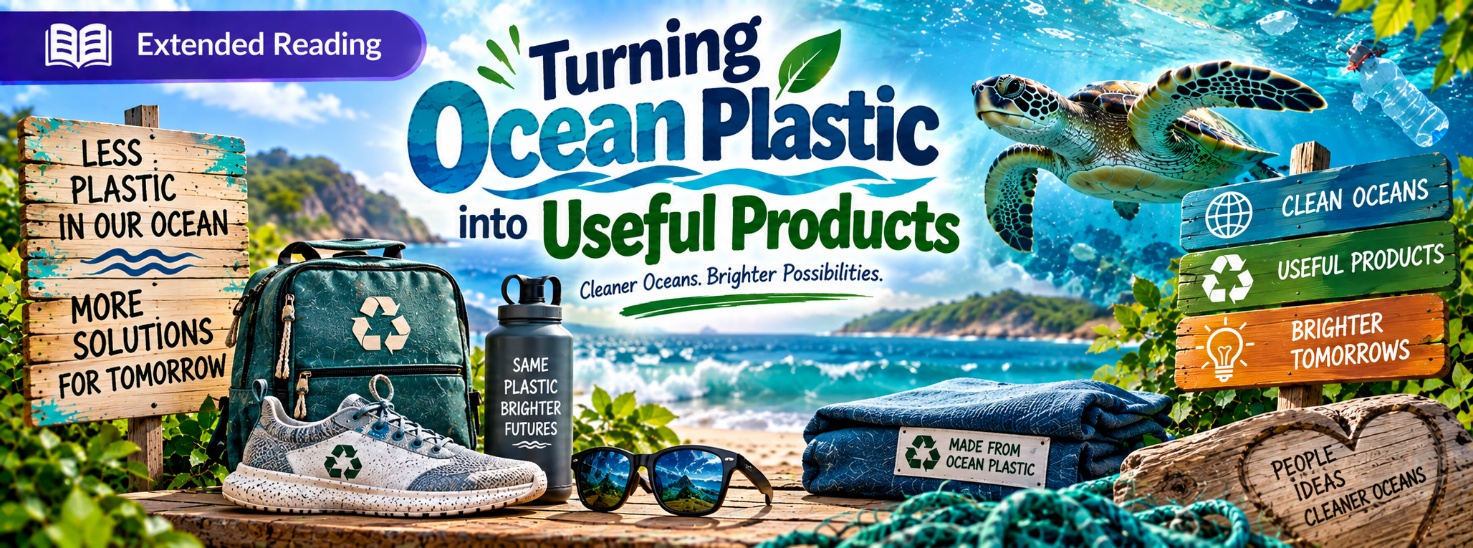
How can rethinking what we discard help create a more sustainable future?
Genre: Argumentative Text
Text Structure: Claim, Reasons, and Evidence
Main Reading Skill: Analyze a Claim and Supporting Evidence
Every year, millions of tons of plastic waste enter the world’s oceans. Bottles, bags, food packaging, and abandoned fishing equipment are carried into the sea by rivers, wind, and human activity. Some plastic remains in the environment for decades, where it can damage marine ecosystems and threaten animals such as turtles, fish, and seabirds. The scale of the problem has led governments, environmental organizations, businesses, and consumers to search for more sustainable ways of managing plastic waste.
No single method can solve ocean plastic pollution. Reducing unnecessary plastic use and preventing waste from entering the environment remain essential. However, plastic that has already been produced also needs to be managed. Turning recovered ocean plastic into useful products is an effective part of the solution because it can keep waste out of the environment, extend the useful life of materials, and encourage businesses and consumers to make more sustainable choices.
One key reason to support this approach is that it gives discarded plastic another use. Cleanup projects in coastal regions collect bottles, fishing nets, packaging, and other waste from beaches and waterways. After collection, workers clean and sort the material before sending suitable plastic to recycling facilities. Manufacturers can then turn to these recycled materials instead of relying entirely on newly produced plastic. In this way, material that was once considered waste can become a useful resource.
A second reason is that recovered plastic can be used to manufacture a wide variety of products. Companies already use recycled plastic to produce shoes, clothing, backpacks, furniture, and reusable bottles. These products demonstrate that discarded material can retain value after its original use has ended. Manufacturers are also trying to upgrade recycling technology so that different types and smaller pieces of plastic can be separated and processed more efficiently. Better technology can extend the useful life of existing materials and reduce some of the need for additional plastic production.
The environmental impact of the recycling process must also be considered. Collecting, transporting, cleaning, and processing plastic requires energy. If that energy comes mainly from fossil fuels, recycling can still create environmental costs. For this reason, some companies are investing in renewable sources of energy to power parts of their recycling operations. Cleaner energy does not remove every environmental impact, but it can help make the process more sustainable.
Consumer behavior provides a third reason to support the use of recycled ocean plastic. Demand for environmentally responsible goods has grown as people have become more aware of pollution and resource use. Surveys of consumers often show that many customers prefer businesses that use greener materials and sustainable manufacturing methods. Such findings suggest that customers can influence business decisions through the products they choose to support.
Consumers can also reconsider how they treat their own possessions. Products do not always need to be discarded simply because they are old or no longer wanted by their first owners. Reusing, repairing, and recycling can keep materials in use for longer. Some environmental groups therefore argue that consumers should take greater ownership of the environmental effects of the products they use. This can include recycling responsibly and making more thoughtful purchases, such as choosing durable goods or products containing recycled materials.
Despite these benefits, there are strong reasons not to view recycling as a complete solution. Ocean plastic can be difficult and expensive to collect. Some waste is too damaged or contaminated to be recycled effectively, and different types of plastic require different processing methods. Recycling also requires energy and cannot prevent unnecessary plastic from being produced. If societies continue to produce and discard large quantities of plastic, recycling systems alone will not be able to address the entire problem.
These limitations do not mean that recycling ocean plastic has little value. Instead, they show why it should be part of a broader strategy. Recycling can recover useful materials that have already been produced, while other measures can reduce unnecessary plastic use, improve product design, and prevent waste from reaching the ocean in the first place. Combining these approaches addresses both existing waste and the creation of future waste.
Turning ocean plastic into useful products is therefore not a complete answer to global plastic pollution, but it can make a meaningful contribution. It can keep materials in circulation, encourage improvements in recycling technology, and influence businesses and consumers to think more carefully about the life cycle of products. With responsible production, effective recycling systems, and thoughtful consumer choices, some of today’s waste can become a useful resource rather than a lasting environmental problem.