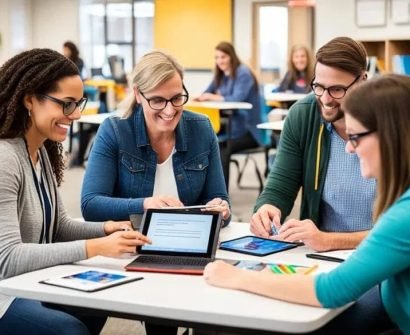

Student-centered learning is an educational approach in which students play a central role in their own learning process.
First – Definition and Approach:
Student-centered learning emphasizes students’ active involvement in their education, shifting the focus from a teacher-centered to a learner-centered model.
Second – Key Features of Student-centered Learning:
- Teacher’s Role: The teacher acts as a facilitator and guide rather than the sole source of knowledge.
- Student’s Role: Students take responsibility for their learning by setting goals and engaging actively in the process.
- Teaching Strategies: A variety of methods, such as inquiry-based learning and cooperative activities, promote critical thinking.
- Learning Environment: The environment is flexible and supportive, encouraging collaboration and interaction.
- Assessment: Diverse assessment methods, including projects and discussions, focus on understanding rather than rote memorization or testing.
Third – Benefits of Student-centered learning:
- Promoting Independence: Encourages students to make educational decisions independently.
- Promoting Independence: Encourages students to make educational decisions independently.
- Meeting Individual Needs: Adapts to different learning styles and individual needs.
- Increasing Engagement: Enhances motivation and participation in the learning process.
- Developing Life Skills: Fosters critical thinking, teamwork, and problem-solving abilities.
Fourth – Examples of Strategies:
- Project-Based Learning: Engages students in long-term projects that explore complex issues.
- Inquiry-Based Learning: Encourages questioning and research to discover solutions.
- Cooperative Learning: Involves collaborative activities aimed at achieving shared learning goals.
Overall Impact:
Student-centered learning empowers students to take ownership of their education, preparing them for future challenges and fostering lifelong learning skills.
Fifth – Challenges of Implementing a Student-Centered Learning Approach
- Complexity in implementation and curriculum redesign.
- Time constraints within the school day.
- Managing diverse classroom dynamics and individualized instruction.
- Addressing varying levels of student readiness and learning styles.
- Developing effective assessment methods that align with the approach.
- Overcoming resistance to change from stakeholders.
- Ensuring equitable access to technology for personalized learning.